A Return to Wholeness
The Illusion of a “Normal” Beginning
On the surface, my childhood looked ordinary. I was born into a family in Indiana that, from the outside, appeared stable and typical. But very early on, I sensed a disconnect between appearance and reality. What people said, how they behaved, and what I felt energetically were often completely incongruent. Even as a child, I could feel that something didn’t quite align.
At the same time, I remember being deeply connected to a sense of wonder and joy. I was a happy, sensitive child, captivated by the beauty of the world, lying in the sun, looking at the stars, and feeling an innate connection to life itself. That connection, though unnamed at the time, was my true nature expressing itself freely.
The Moment Everything Changed
Alongside that innocence came experiences that deeply impacted my sense of self. I heard harmful conversations about women and people of different races that caused my body to contract. I began to understand that being sensitive, expressive, and different was not always welcomed, especially as a young boy growing up in that environment.
By the age of seven, something profound happened. I experienced what I can only describe as my heart closing. It wasn’t just a thought, it was a physical, emotional, and energetic shift. In that moment, I formed core beliefs: I am not lovable. I am not smart enough. I am not good enough.
These beliefs didn’t just live in my mind. They became my reality. For years, I walked through the world feeling unsafe, disconnected, and afraid.
Coping, Survival, and the Search for Relief
What I now understand is that this closing off was not a failure, it was a brilliant survival strategy. It protected me from pain, but it also blocked me from the love and connection I deeply desired.
By my early teens, I discovered alcohol and marijuana. I didn’t consciously think I was medicating trauma or managing shame. What I experienced was relief. Suddenly, the world felt softer. I felt open again, connected again, even if temporarily.
Substances became my way of managing the deep-seated beliefs and emotional pain within me. They worked, until they didn’t.
Addiction as a Misguided Path to Connection
As my use progressed, especially with substances like ecstasy, I found what felt like a return to my heart. I experienced love, connection, and openness in ways I hadn’t felt since childhood. But like all external solutions to internal pain, it was unsustainable.
I began chasing that initial experience, increasing my use in an attempt to recreate it. This led to dangerous consequences, including an overdose where I truly believed I was dying. Even in that moment, I didn’t feel worthy enough to ask for help.
That level of disconnection reveals something profound: addiction is not simply about substances. It is about a deep rupture in our relationship with ourselves.
The Turning Point: Entering Recovery
Eventually, through a series of events and a connection with someone in recovery, I found my way into a meeting. Walking into that room, I didn’t know exactly what I was stepping into, but I knew I needed something different.
For the first time, I began to feel that I could receive love from others. That moment marked the beginning of my sobriety. Yet, while I had stopped using substances, I had not yet addressed the deeper wounds within me.
Instead, I clung tightly to recovery as a structure. I became rigid, certain that I had the answers, while still avoiding the deeper emotional and psychological work that needed to be done.
The Hidden Pain Beneath Sobriety
Eighteen months into sobriety, I found myself suicidal. This was confusing and disorienting. I was doing everything I thought I was supposed to do, yet I still felt deeply broken.
It was during this time that I met someone who would change the course of my life. Through her presence and guidance, I was introduced to a radically different perspective: that there is a place within each of us that is already whole and perfect.
This idea challenged everything I believed about myself. I had built an identity around being broken, flawed, and unworthy. To consider that I was inherently whole was both unsettling and liberating.
A New Paradigm: Returning, Not Becoming
What I began to understand is that recovery is not about becoming a better version of a broken person. It is about returning to the truth of who we already are.
The beliefs I formed as a child were not truths, they were adaptations. They were conclusions drawn in moments of pain and confusion. And those beliefs shaped my perception of reality.
When we carry a frequency of unworthiness, we see evidence of it everywhere. But the powerful realization is this: if we created that perception, we can also transform it.
Recovery, then, becomes a process of unlearning. It is about creating inner safety, turning toward what has been avoided, and gently dismantling the false beliefs that no longer serve us.
Redefining Addiction and Healing
Through my work in the behavioral health field, I began to see patterns. Many people identified themselves as fundamentally broken, as lifelong sufferers of a condition they could only manage. But what if addiction is not simply a disease to be managed? What if it is also a brilliant strategy for survival?
What if substances, behaviors, and patterns are attempts to cope with unresolved trauma, spiritual disconnection, and toxic shame? When we begin to see addiction through this lens, everything changes. It shifts from a narrative of pathology to one of compassion and understanding.
The Truth of Our Nature
At the core of this work is a simple yet profound truth: we are not broken.
We came into this world whole and perfect. Life happened. Experiences shaped us. Beliefs were formed. Strategies were developed. But none of that changed the essence of who we are.
There is a place within each of us that is untouched by trauma, beyond shame, and unaffected by our past behaviors. Recognizing this does not remove accountability, but it transforms our relationship with ourselves. From that place, true healing becomes possible.
A New Possibility
What I offer is not just a story, but a possibility.
A possibility that you can return to your true nature.
A possibility that healing is not about fixing yourself, but remembering who you are.
A possibility that, in a single moment of awareness, everything can begin to change.
Recovery may be a process, but it can also be an instantaneous recognition of a deeper truth. And from that recognition, a new trajectory unfolds.
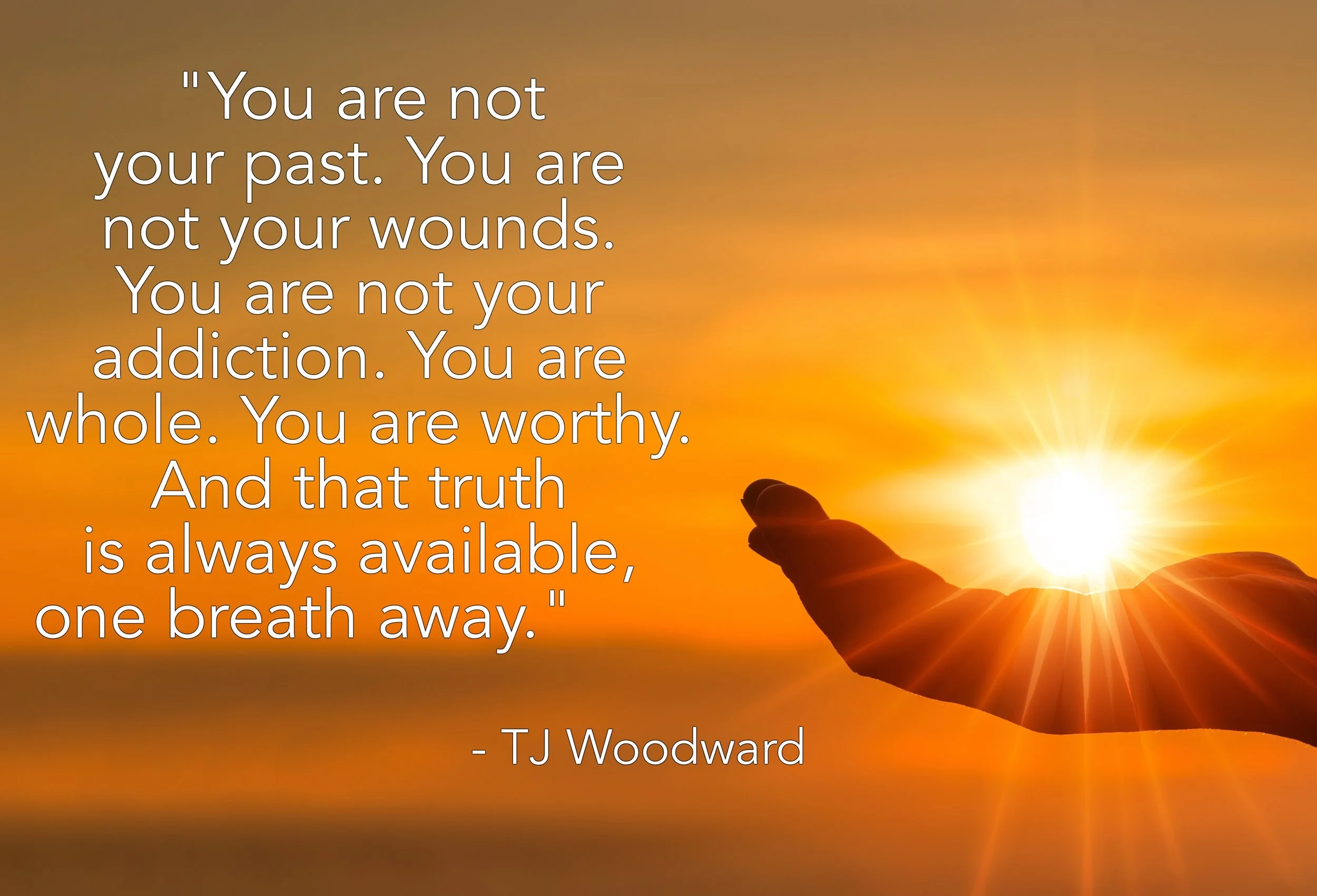
You are not your past.
You are not your wounds.
You are not your addiction.
You are whole. You are worthy. And that truth is always available, one breath away.